 View all
 Champagne
 Sparkling Wines
 Red Wines
 White Wines
 Rosé Wines
 Alcohol-free
 Bag in box
 Fortified Wines
 Passito Wines
 Cocktails
 Gin
Gin
 Liqueur
 Whisky
 Grappa
 Rum
Rum
 Alcohol-free
 Brandy
 Eau de vie
 Tequila
 Vodka
Vodka
 Blonde
 Amber
Amber
 Red
Red
 Dark
Dark
 Mixology
 Beers
Beers
 Olive Oil
 Vinegar
 Accessories


Product details
Nutrition Declaration
 You can also order it by phone by speaking with us.
Description
What kind of wine it is
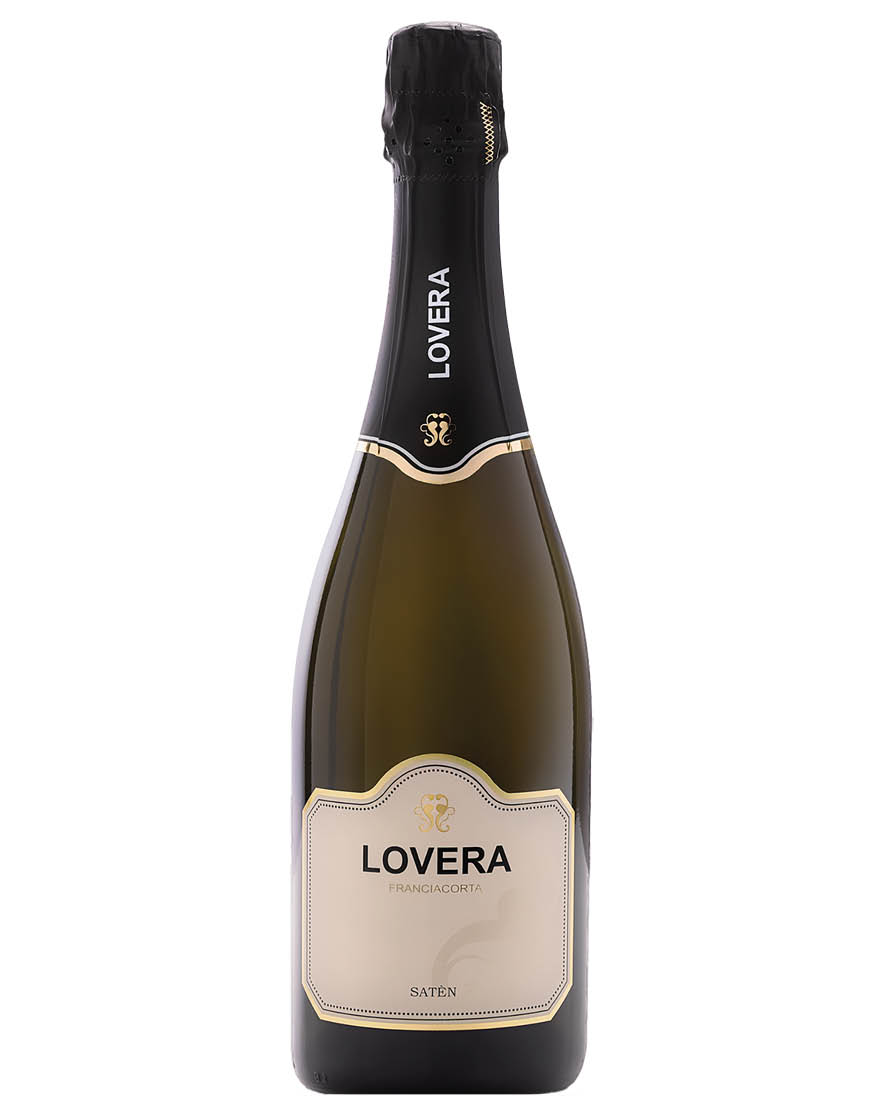
Franciacorta Satèn Lovera is a white wine made from Chardonnay grapes grown on north-east facing slopes. Crafted with the Traditional Method, it boasts an elegant profile and a silky texture. The structure remains balanced, and the freshness supports a harmonious character, with aromatic complexity developing thanks to fermentation in stainless steel and extended aging on the lees.
Where it comes from
This Franciacorta is produced in Erbusco, in the heart of Franciacorta, Lombardy. The vineyards are located around 300 meters above sea level, on loamy soils that provide good drainage and proper water retention. The area is well-known for its long tradition in the Traditional Method.
How it is produced
The Chardonnay grapes are hand-picked and carefully selected in the vineyard to preserve freshness and integrity. After gentle pressing, the must ferments in stainless steel at a controlled temperature and rests for ten months. This is followed by bottle re-fermentation according to the Traditional Method, with aging on the lees for at least twenty-four months. The result is a fine and persistent mousse, true to the Satèn style.
Tasting notes
It appears a bright straw yellow with a fine, steady perlage. On the nose, notes of tropical fruit and white flowers emerge, with delicate toasted hints. On the palate, it delivers an enveloping creaminess, a balance of acidity and softness, and a silky texture. The finish is harmonious, with citrus and mineral hints inviting another sip.
Food pairing
This Franciacorta Satèn pairs well with delicate fish dishes such as salmon tartare or sea bass carpaccio. Its softness also suits saffron risotto and Monza-style risotto. Excellent with fresh soft cheeses and acacia honey, it also works with light vegetable tempura for a pleasant contrast.
When to serve it
Franciacorta Satèn Lovera should be served at 8-10°C in large tulip glasses to enhance aromas and perlage. It is best enjoyed young to appreciate its freshness but can evolve in the bottle for several years, during which toasted notes and greater complexity emerge without losing brightness. Perfect for convivial moments or as a refined aperitif.
1 product of Lovera View all
1 product of Lovera

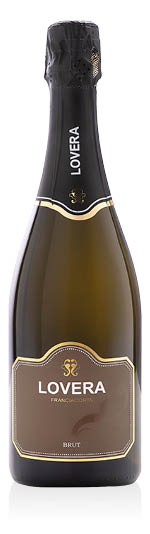
Franciacorta DOCG Brut Lovera
You may also be interested in


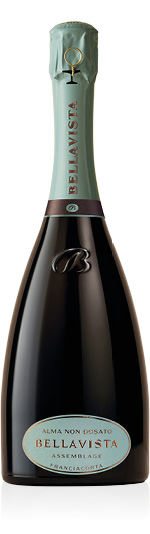
Franciacorta DOCG Pas Dosé Alma Non Dosato Assemblage 3 Bellavista
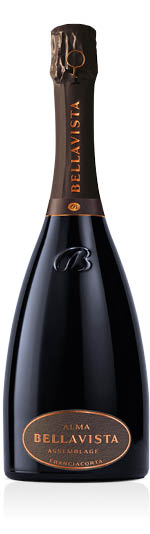
Franciacorta DOCG Extra Brut Alma Assemblage 2 Bellavista

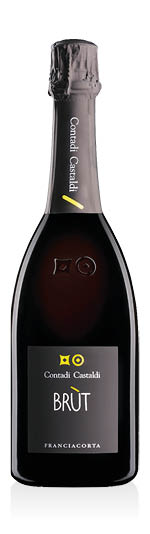
Franciacorta DOCG Brut Contadi Castaldi


Franciacorta DOCG Brut Ca' del Diavolo
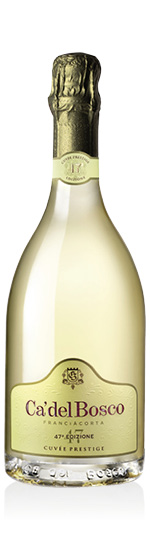
Franciacorta DOCG Extra Brut Cuvée Prestige Edizione 48 Ca' del Bosco