 View all
 Champagne
 Sparkling Wines
 Red Wines
 White Wines
 Rosé Wines
 Alcohol-free
 Bag in box
 Fortified Wines
 Passito Wines
 Cocktails
 Gin
 Grappa
 Liqueur
 Rum
 Whisky
 Alcohol-free
 Brandy
 Eau de vie
 Tequila
 Vodka
 Mixology
 Beers
 Olive Oil
 Vinegar
 Accessories
Westmalle
Westmalle is the Trappist brewery of the Abbey of Westmalle in Belgium, located within the monastery walls. The abbey's roots go back to 1794, when a group of French Cistercians, fleeing the Revolution, settled at the “Nooit Rust” farm in Malle; on April 22, 1836 the monastery became a Trappist abbey, and from that date the brewery's story also begins. Over time the monks turned heathland and marshes into fertile farmland.
At first the beer was brewed for the monks' own consumption, and only from 1856 was it occasionally sold at the abbey gate. In 1926 the Dubbel was introduced, made by doubling the ingredients of the original dark beer, and in 1934, with the opening of a new brewhouse, the Tripel was created: according to the abbey, the first Tripel in history was brewed within its very walls.
Westmalle beers are made from five natural raw materials: barley malted to their own specifications, a blend of European hops, pure water drawn from a deep aquifer, sugar, and Westmalle yeast cultured at the abbey. The beers are neither pasteurized nor are stabilizers added. The range includes Westmalle Dubbel, Westmalle Tripel and Westmalle Extra.
As required by the “Trappist” designation, production takes place in the monastery under the supervision of the monks, and the proceeds support the community, the brewery, other Cistercian abbeys and charitable works. The beers bear the international “Authentic Trappist Product” label.
In this way, Westmalle brings together monastic life and the art of brewing, safeguarding a tradition that began in 1836.

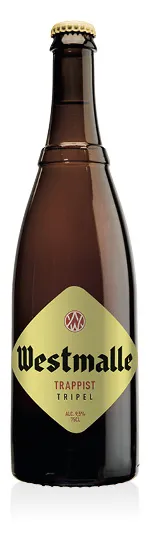
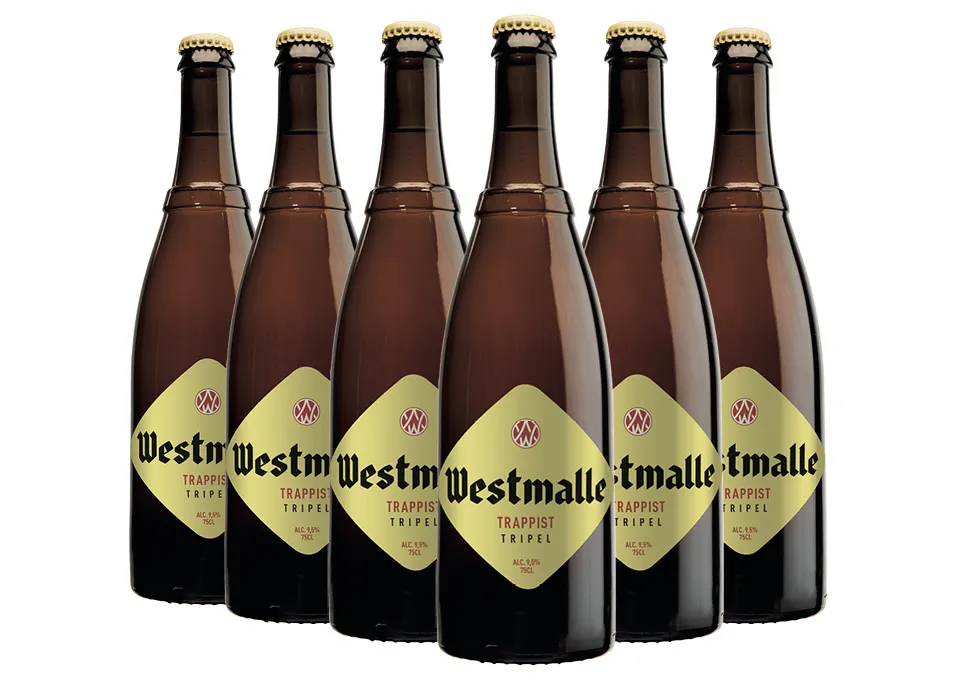
Trappist Tripel Westmalle
Trappist Tripel Westmalle, 6 x 0,75 ℓ bottles
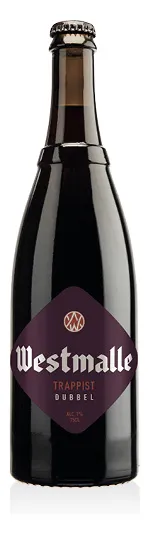
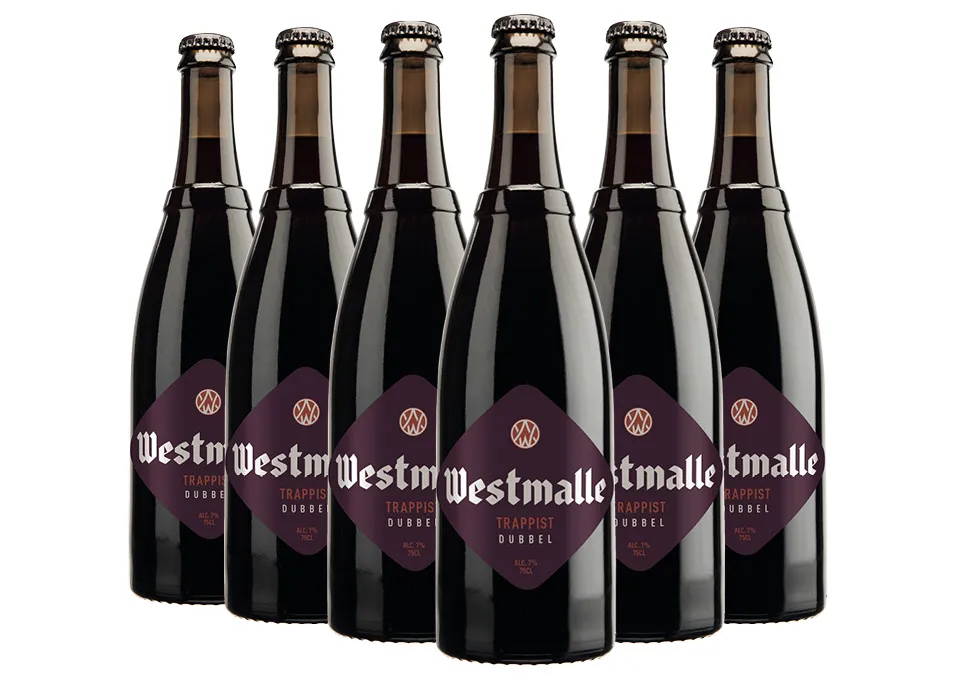
Trappist Dubbel Westmalle
Trappist Dubbel Westmalle, 6 x 0,75 ℓ bottles