 View all
 Champagne
 Sparkling Wines
 Red Wines
 White Wines
 Rosé Wines
 Alcohol-free
 Bag in box
 Fortified Wines
 Passito Wines
 Cocktails
 Gin
 Grappa
 Liqueur
 Whisky
 Rum
 Alcohol-free
 Brandy
 Eau de vie
 Tequila
 Vodka
 Mixology
 Beers
 Olive Oil
 Vinegar
 Accessories
Spirits by Saint James
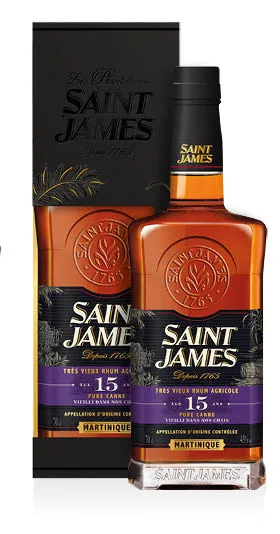
Saint James is a historic agricole rum from Martinique, produced since 1765 by Plantations Saint James and is among the founders of the AOC Martinique appellation. Its story begins on the west coast of the island, at the foot of Montagne Pelée, where the Frères de la Charité ran the hospital of Fort Saint-Pierre. To meet the hospital’s needs, Father Edmond Lefébure had a sugar mill built in the locality of Trou Vaillant, where distillation began.
The surplus rum was sold to the English colonies of North America, because at the time shipping cane spirit to France was prohibited. Since "Trou Vaillant" was difficult to pronounce in English, the brothers chose the name of a nearby habitation, Saint Jacques, which in English becomes James: thus the rum Saint James was born.
In 1882 the Marseille merchant Paulin Lambert, who had purchased the Habitation of Trou Vaillant, registered the brand with its famous square‑base bottle, designed to optimize space in the holds and reduce breakage, and a label featuring a caiman in a cane field. In 1885 he launched the first vintage rum, presenting Saint James as the first agricole rum of the French Antilles. In 1902 the eruption of Montagne Pelée destroyed the city of Saint‑Pierre, but the distillery, in a deeply recessed valley, was only partially damaged.
Saint James rum is born from the fermentation and Creole column distillation of pure sugarcane juice, in accordance with the rules of the AOC Rhum Agricole Martinique, granted in 1996. No added sweeteners are allowed, and the rums are well suited to aging in oak casks.
Over two and a half centuries of history make Saint James a symbol of Martinique’s agricole rum.


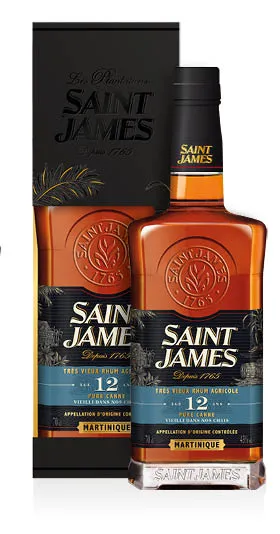
Martinique AOC Rhum Vieux Agricole 12 Years Saint James