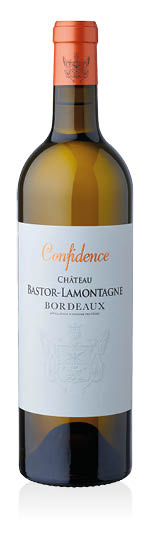
The Bordeaux denominations can generally be divided into six main families, four of which are related to red wines: the wines of the left bank of the Gironde, those of the right bank of the Dordogne, the Ctes de Bordeaux, and the wines of the Bordeaux AOC denomination.
On the left bank, we find the Mdoc, which includes the more well-known and highly regarded subzones of Pauillac, Margaux, Saint-Estphe, Saint-Julien, and the lesser-known Moulis and Listrac; and the Graves, which includes the subzone of Pessac-Lognan. In this area, wines based on Cabernet Sauvignon are produced, often blended with Merlot. These are concentrated, tannic wines suitable for aging. It is here that the Grand Cru Class of the 1855 classification and that of Graves can be found.
On the other bank, around the city of Libourne, there are another ten denominations, the most important of which are Saint-milion and Pomerol, where very concentrated wines with velvety tannins, based on Merlot, are produced. Saint-milion has its own distinct classification.
In the Bordeaux AOC denomination, which encompasses the entire wine region, fruity and easy-drinking wines flow in, more suited for everyday consumption than for long aging, whereas the Bordeaux Suprieur, produced in the same area but with more restrictive requirements, including a minimum aging of 12 months, are richer and more complex wines compared to basic Bordeaux.
On the other hand, the Ctes de Bordeaux denomination, created in 2009 from the merger of four previously known subzones as Premires Ctes de Blaye, Ctes de Castillon, Ctes de Francs, and Premires Ctes de Bordeaux. Here, mainly Merlot-based wines are produced, which constitute a middle ground between the wines of the left bank and those of the right bank, in terms of quality and style.
The 1855 Classification
The 1855 classification of Bordeaux wines is the most famous and influential ranking in the wine world. This system was initiated by Emperor Napoleon III for the Paris Universal Exposition, so that the best Bordeaux wines would be more recognizable even outside the borders of France. The leading Bordeaux wine merchants were invited to create a list of the region's best estates grouped into five levels based on the market price of the wines: the list included 58 properties, led by Chateau Lafite, the most expensive wine of the time. All the red wines on the list came from the Mdoc region, except for the Chteau Haut-Brion from Graves. This list has remained mostly unchanged, with one significant exception: in 1973, Chteau Mouton Rothschild successfully moved from second to first cru.
The four original Premier Crus were: Chteau Lafite, Chteau Haut-Brion, Chteau Margaux, and Chteau Latour.

 View all
 Champagne
 Sparkling Wines
 Red Wines
 White Wines
 Rosé Wines
 Alcohol-free
 Bag in box
 Fortified Wines
 Passito Wines
 Cocktails
 Gin
Gin
 Whisky
 Liqueur
 Grappa
 Rum
Rum
 Alcohol-free
 Brandy
 Eau de vie
 Tequila
 Vodka
Vodka
 Blonde
 Red
Red
 Amber
Amber
 Dark
Dark
 Mixology
 Beers
Beers
 Olive Oil
 Vinegar
 Accessories