
 View all
 Champagne
 Sparkling Wines
 Red Wines
 White Wines
 Rosé Wines
 Alcohol-free
 Bag in box
 Fortified Wines
 Passito Wines
 Cocktails
 Gin
 Liqueur
 Rum
 Whisky
 Grappa
 Alcohol-free
 Brandy
 Eau de vie
 Tequila
 Vodka
 Mixology
 Beers
 Olive Oil
 Vinegar
 Accessories
De Stefani
De Stefani is a Veneto winery that for five generations has pursued excellence, between the hills of Refrontolo and the Piave plain. The story begins in Refrontolo, on the hills between Conegliano and Valdobbiadene, now a UNESCO World Heritage site, where Valeriano De Stefani, later joined by his son of the same name, cultivated vines and produced wines from dried grapes, favoring Marzemino and Prosecco.
With the third generation, Tiziano De Stefani, a graduate of the Conegliano School of Enology in 1958, the winery expanded: in 1963 it purchased its first vineyards in the Piave area and began vinification in Fossalta di Piave, over time introducing temperature control, small barrels for aging, and denser plantings to reduce yield per vine. At his side works his son Alessandro, an oenologist, and since 1996 a distribution network has been bringing the winery’s wines to over 40 countries.
Among the most significant milestones are the first harvest in 1985 of Tombola di Pin, a traditional-method sparkling wine from a single vineyard in Refrontolo, and in 2003 the first vintage of Stèfen 1624, from a Marzemino vineyard on the hills of Refrontolo. In 2007 the Raboso Piave vineyard destined for Malanotte was established, and the winery adopted a natural philosophy, with no herbicides or chemical fertilizers in the vineyard and no preservatives or added sulfites in the cellar.
The winery in Fossalta di Piave, built in 1993 and expanded in 2013, houses areas for aging in barrique and in bottle, drying of the grapes, and tasting. The commitment to sustainability is evidenced by Equalitas certification. Production is organized into several lines, including De Stefani, Bailo, Redentore, Naturalmente, DS, and Zero.
Family tradition, innovation, and respect for nature make De Stefani a true ambassador of the wines of the Piave and the Conegliano Valdobbiadene hills.


Venezia DOC Refosco Riserva Kreda 2021 De Stefani


Zero Sparkling Alcohol Free De Stefani

Veneto Rosso IGT Solèr 2022 De Stefani

Prosecco Extra Dry DOC Millesimato 0.15 2025 De Stefani

Trevenezie IGT Venis 2025 De Stefani

Venezia DOC Riserva Cabernet Sauvignon 2023 De Stefani

Prosecco DOC Brut Rosé 0.15 Millesimato 2025 De Stefani

Chardonnay-Sauvignon Zero Alcohol Free 2025 De Stefani

Pinot Grigio Delle Venezie DOC 2025 De Stefani
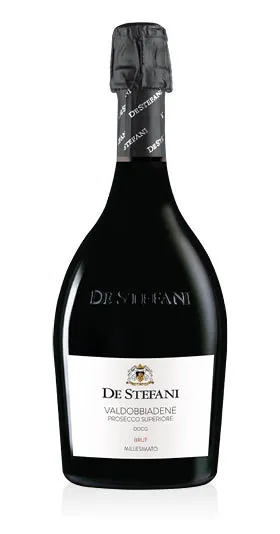
Valdobbiadene Prosecco Superiore DOCG Brut Millesimato 2025 De Stefani


Valdobbiadene Prosecco Superiore DOCG Brut Millesimato 2024 De Stefani
